

How to Choose Kitchen Materials That Last
- David Moore
- 9 hours ago
- 6 min read
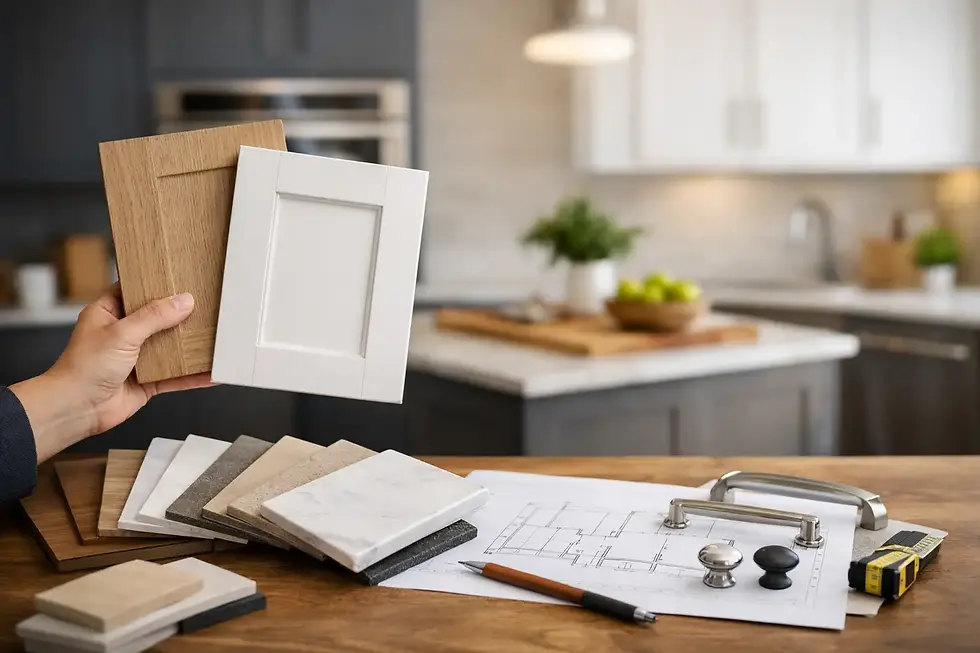
The most successful kitchens do not rely on one standout surface. They are built from materials that work together - visually, practically and over time. Knowing how to choose kitchen materials means looking beyond a showroom sample and considering how each finish will perform in the way your household actually lives.
A pale worktop may suit the light in a Surrey period property beautifully, for example, but its durability, edge detail and relationship with the cabinetry are equally important. Material decisions affect the daily experience of the room, the quality of the installation and the confidence you will have in the finished kitchen for years to come.
Start with the way the kitchen will be used
Before selecting door finishes, worktops or flooring, establish a clear brief. A kitchen used by a busy family for breakfast, homework and entertaining has different requirements from a refined space primarily used by two adults. Neither approach is better, but the specification should reflect the reality of the home.
Consider how frequently you cook, whether children or pets are likely to test lower cabinetry, and whether the kitchen opens directly onto a garden. Also think about maintenance honestly. Natural materials can develop character with age, but they may require more care than engineered alternatives. A material that looks exceptional but causes regular worry is rarely the right choice.
Light levels matter too. In a north-facing kitchen, warm timber tones, softer off-whites and carefully selected worktop finishes can make the room feel more inviting. In a bright, south-facing extension, a highly reflective door or polished stone may create unwanted glare. Samples should always be reviewed in the intended room, at different times of day, rather than judged under showroom lighting alone.
How to choose kitchen materials in the right order
It is tempting to begin with the worktop or a favourite cabinet colour. In practice, a considered order makes decisions simpler and helps avoid compromises later in the project.
Start with the cabinetry style and overall palette, then refine the worktop, splashback, flooring and hardware. Cabinetry occupies the largest visual area, so it establishes the room's character. The worktop adds weight, contrast and texture, while flooring and smaller details should support the scheme rather than compete with it.
This does not mean every surface must match. A well-designed kitchen often combines painted cabinetry with warm timber, honed stone and aged metal accents. The objective is balance. Too many competing grains, colours or sheen levels can make even expensive materials feel unsettled.
Cabinet doors: appearance and resilience
Painted cabinetry remains popular because it offers exceptional flexibility in colour and can be well suited to both classic and contemporary homes. It is also possible to refresh a scheme in the future. However, painted finishes may show knocks or chips more readily in high-traffic areas, particularly around integrated bins, pantries and island seating.
Timber veneer brings natural variation and warmth that cannot be replicated exactly by a printed finish. It is particularly effective when used selectively, perhaps on a feature bank of tall units or an island, where the grain can be appreciated without overwhelming the room. The quality of the veneer, direction of the grain and consistency across doors all deserve close attention.
Laminate and melamine finishes have advanced considerably and can offer an excellent practical solution, especially for utility areas or contemporary designs. Their performance varies significantly by manufacturer, so the detail matters: inspect the edge finish, the feel of the surface and how it pairs with the handles, lighting and worktop.
Worktops: decide where you want character and where you need certainty
Worktops carry much of the kitchen's daily workload. They must withstand preparation, heat, spills and regular cleaning while contributing strongly to the design.
Natural stone, including marble, granite and quartzite, offers depth and individuality. Each slab has its own movement and tonal variation, making it a compelling choice for clients who value a more distinctive finish. Marble is beautiful but more susceptible to staining and etching, so it is best chosen with a realistic appreciation that it will develop a patina.
Quartz provides a consistent, low-maintenance surface with wide-ranging colours and patterns. It is highly practical for many households, although care is still needed with direct heat. Porcelain and sintered stone are increasingly specified for their heat, scratch and stain resistance. Their slim profiles and ability to continue up the wall can create a precise, architectural look, although fabrication and installation require experienced handling.
Timber worktops bring softness to a scheme and are particularly appealing for breakfast bars and smaller feature areas. They do require regular oiling and will show use over time. Often, the most effective solution is not one worktop material throughout, but a durable primary surface combined with timber or stone on an island to create contrast.
Treat splashbacks and flooring as working surfaces
Splashbacks are often selected late, yet they have a major influence on the final composition. A continuation of the worktop material up the wall creates a calm, tailored appearance and can be especially effective behind a hob. Tiles introduce texture, colour and pattern, but grout lines require consideration in cooking zones.
For a simpler backdrop, painted glass, metal or a restrained tiled finish can allow a striking worktop to remain the focal point. The key is proportion. A highly patterned splashback next to a heavily veined stone can become visually busy, whereas a quieter material gives the scheme room to breathe.
Kitchen flooring needs to connect the kitchen to adjoining spaces while standing up to practical demands. Porcelain tiles are durable, easy to maintain and available in many convincing stone and timber effects. They can feel cool underfoot, though underfloor heating changes that considerably.
Engineered timber provides warmth and works well in open-plan homes, provided it is suitable for kitchen use and finished correctly. It will still respond to water and wear differently from porcelain, so it may not be ideal for every household. Luxury vinyl tile can offer a practical alternative where comfort, acoustic performance and ease of maintenance are priorities. As with all materials, the quality of the product and installation is decisive.
Pay attention to the details people touch every day
Handles, taps, sinks and internal fittings may be smaller elements, but they shape how the kitchen feels in use. A handle should be comfortable to grip as well as visually appropriate. Unlacquered brass and living finishes can age attractively, while polished chrome and stainless steel offer a more consistent appearance with straightforward maintenance.
Sink material should respond to your habits. Stainless steel remains a dependable choice for hard-working kitchens, while composite sinks are available in softer, darker tones that complement contemporary palettes. Ceramic suits more traditional designs but needs careful consideration around impact. Taps should be selected for reach, water pressure, finish durability and the practicalities of any boiling-water or filtered-water function.
Do not overlook internal materials either. Drawer boxes, pantry pull-outs and bin systems should feel substantial, operate smoothly and support how food, cookware and tableware will be stored. These are not merely upgrades. Well-planned internal fittings reduce clutter and make the kitchen more efficient every day.
Balance longevity with a design that feels personal
A durable kitchen does not have to be neutral or cautious. The aim is to place bolder materials where they can be enjoyed and to make practical choices where wear is inevitable. A richly coloured island, a dramatic stone or a textured timber finish can give a kitchen identity, while quieter surrounding surfaces provide longevity.
It is also worth thinking about future adaptability. Cabinet colours can be repainted more easily than a full worktop can be replaced. Lighting, handles and stools can evolve with changing tastes. Investing in a sound layout, quality cabinetry and carefully installed core materials gives you a kitchen that can be refreshed without starting again.
At Moore By Design, material selection is considered alongside layout, appliance planning, lighting and installation detail from the outset. This joined-up approach helps ensure that a beautiful sample becomes a coherent, practical kitchen rather than an isolated choice made too early.
The best materials are not always the most expensive or the most fashionable. They are the ones that suit your home, support your routines and still feel right when the kitchen has become part of everyday life. Take time to view full samples together, discuss the compromises openly and choose with the whole room in mind.


Comments