
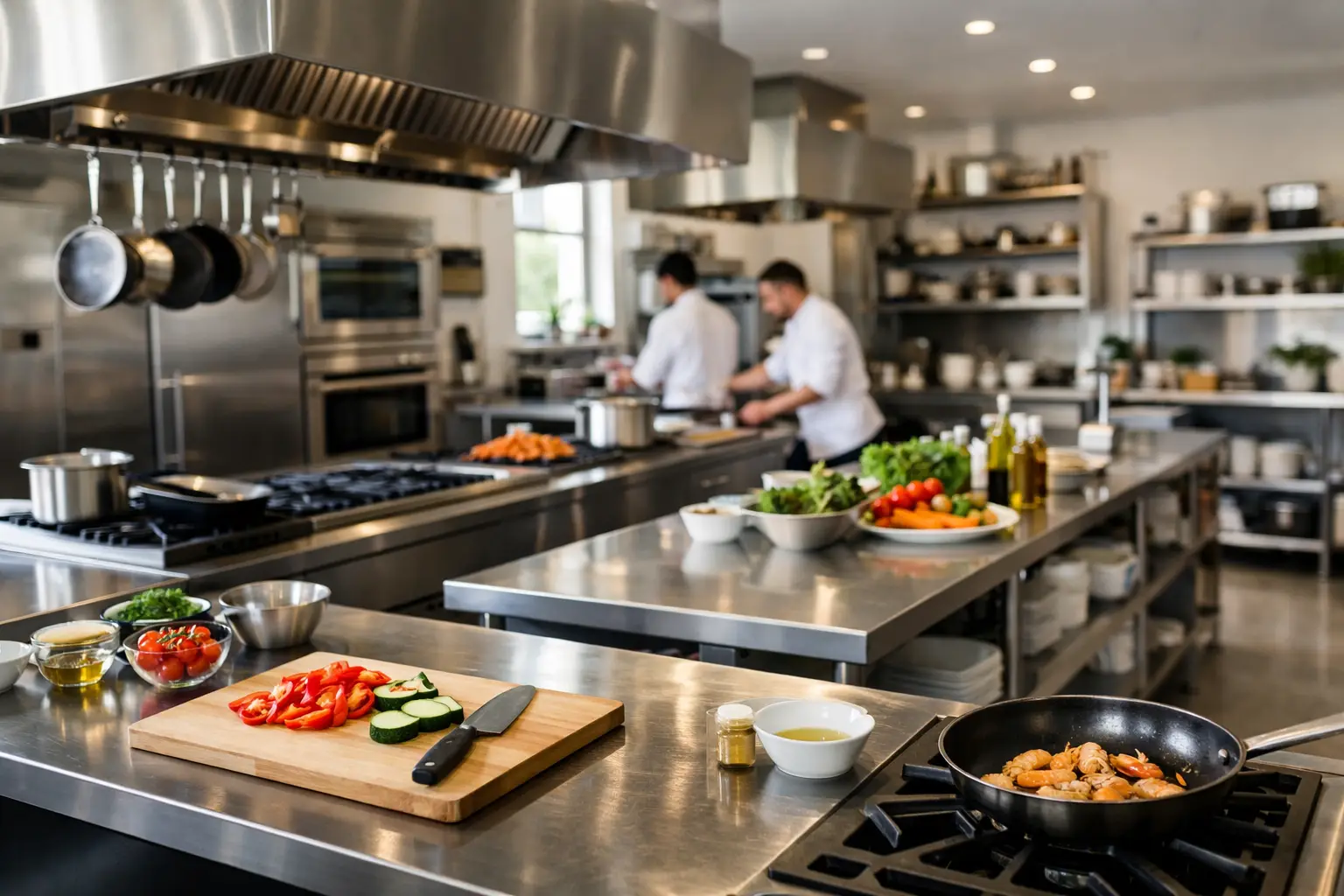
Best Professional Kitchen Layout Ideas
A kitchen can look exceptional on paper and still feel awkward the moment daily life begins. The best professional kitchen layout is not simply the one with the largest island or the most storage. It is the one that supports how your household cooks, entertains, moves and lives, while resolving the practical demands of the room with precision.
That distinction matters. Many homeowners begin by collecting images of beautiful kitchens, then try to fit those ideas into a space that has its own architectural constraints, service points and traffic patterns. A successful layout starts in the opposite direction. It begins with the room, the brief and the way the kitchen needs to perform every day.
What makes the best professional kitchen layout?
In residential design, a professional kitchen layout borrows the discipline of commercial planning without losing the warmth and comfort expected in a home. The goal is efficiency, but not at the expense of aesthetics. It should feel calm, intuitive and well resolved.
A strong layout usually depends on four essentials: clear zoning, sensible circulation, considered storage and well-planned appliance placement. When these elements are handled properly, the kitchen feels easy to use. When they are not, even the most expensive cabinetry and worktops cannot disguise the friction.
Clear zoning means preparing, cooking, washing and storing are arranged in a logical sequence. Circulation refers to how people move through the room, especially when more than one person is using it. Storage must support the items you actually own, not an idealised version of kitchen life. Appliance placement should reduce unnecessary steps and avoid congestion.
The best professional kitchen layout depends on the room
There is no single layout that suits every property. The right answer depends on the proportions of the room, the location of windows and doors, ceiling height, structural possibilities and how open the kitchen is to surrounding spaces.
In a period property in Surrey, for example, you may be working with character features, uneven walls or a series of linked rooms rather than one large open-plan shell. In a newer extension, you may have more freedom, but also more pressure to ensure the kitchen connects elegantly with dining and living zones. The best professional kitchen layout always responds to the architecture rather than fighting it.
This is why off-the-shelf planning so often falls short. Generic layouts may tick basic functional boxes, but they rarely address the subtleties that make a kitchen feel properly integrated into the home.
Galley, L-shape, U-shape or island?
Each layout type has strengths, but each also carries trade-offs.
Galley kitchens
A galley kitchen can be extremely efficient. With two parallel runs, everything is within easy reach and the working triangle often performs well. In narrower rooms, this can be the best use of space.
The risk is that it can feel corridor-like if there is insufficient width between cabinetry runs, or disconnected if it lacks a visual focal point. It works particularly well when detailed carefully, with good lighting and tall storage positioned so the space does not feel enclosed.
L-shaped kitchens
An L-shaped arrangement is flexible and often suits open-plan spaces. It can create an easy working flow while leaving room for a dining table or island. It also helps the kitchen feel less dominant in a multi-use room.
The challenge is making sure the distances between key functions are not too spread out. If the sink, hob and refrigeration are placed too far apart, the kitchen can become less efficient than it first appears.
U-shaped kitchens
A U-shaped plan offers generous work surface and storage, making it attractive for keen cooks. It can feel highly functional and contained, especially in a dedicated kitchen room.
However, it needs careful proportioning. If the room is too small, it can feel restrictive. If too large, the layout may lose the compact efficiency that makes a U-shape appealing in the first place.
Island kitchens
The island remains popular for good reason. It can provide preparation space, informal seating, additional storage and a social focal point. In larger homes, it often helps connect kitchen, dining and family areas.
Yet an island is not automatically the right answer. It demands adequate clearance on all sides and should not be inserted simply because it is fashionable. In some rooms, a peninsula or well-planned table arrangement will work harder and feel more comfortable.
Why workflow matters more than trends
The most successful kitchens are built around movement. Preparing vegetables at one end of the room and carrying them across a busy walkway to the hob may not seem significant during planning, but it becomes frustrating very quickly in everyday use.
Professional layout planning looks closely at sequence. Where do you unpack groceries? How close is refrigeration to the preparation area? Is there landing space beside the ovens? Can someone make tea without crossing the main cooking zone? These are small questions that lead to significant improvements.
This is also where a bespoke process adds real value. A refined layout should be tailored to routines, not assumptions. A family that entertains regularly will need something different from a couple who prefer a quieter, more pared-back kitchen. An enthusiastic cook may prioritise prep space and specialist storage, while another client may care more about elegant concealment and a strong connection to the garden room.
Storage should shape the layout, not follow it
One of the most common mistakes in kitchen design is treating storage as an afterthought. Good storage planning should influence the layout from the outset, because cabinetry depth, drawer widths, internal accessories and tall housing all affect how the room works.
For example, a bank of tall units can provide excellent pantry and appliance storage, but if placed in the wrong area it may make the room feel top-heavy or block natural light. Equally, a beautiful island can lose much of its usefulness if it is designed without practical drawers for cookware, utensils or everyday crockery.
The best professional kitchen layout accounts for what needs to be stored and where each item is used. Plates belong near the dishwasher or dining area. Pans should sit close to the cooking zone. Food storage should be easy to reach from preparation surfaces. These relationships make the space feel intuitive rather than merely attractive.
Appliance placement needs careful judgement
Appliance planning is often where layout quality becomes most obvious. Ovens, refrigeration, extraction, dishwashers and smaller integrated appliances all need more thought than many homeowners expect.
Eye-level ovens can be highly convenient, but they must sit naturally within the wider scheme. Large fridge freezers need enough clearance for doors and drawers to open fully. A dishwasher should not obstruct circulation when loaded. Extraction must work effectively in the room configuration, especially in open-plan homes where odour and noise travel further.
There is also the question of balance. A kitchen should not feel like a line-up of appliances. The strongest schemes integrate them with restraint, ensuring function is excellent without allowing technical elements to dominate the design.
Open-plan kitchens need stronger zoning, not less
When a kitchen sits within a larger living space, layout discipline becomes even more important. Open-plan rooms often appear generous, but they can be surprisingly complex. The kitchen has to work as a practical workspace while also contributing to the overall feel of the interior.
This is where zoning becomes essential. The cooking area should not interrupt the dining route. Seating should feel connected but not cramped. Views into the kitchen from adjoining spaces should be considered carefully, especially if you want the room to feel composed even during busy family life.
Materials and cabinetry design help, but layout does most of the heavy lifting. If the room flows well, the entire space feels calmer.
Why expert planning changes the outcome
A well-designed kitchen is rarely the result of one good idea. It comes from a sequence of informed decisions, tested against the practical realities of the property and the client brief. That is why experience matters so much.
An expert designer will look beyond the obvious arrangement and assess proportions, sightlines, service locations, structural options and installation implications. They will also challenge ideas that look appealing but create compromises later. In many cases, the best solution is not the most elaborate one. It is the one that quietly resolves competing demands with clarity.
For homeowners investing seriously in their property, that level of thinking protects both the aesthetic result and the day-to-day experience of using the space. It also makes the wider project feel more controlled, which is particularly valuable during a full renovation. This is very much the approach taken at Moore By Design, where the emphasis is on thoughtful design and careful project coordination from the outset.
If you are trying to identify the right layout for your home, it helps to look past trend-led features and focus on how the room should truly function. The most impressive kitchens are not those that shout the loudest. They are the ones that feel effortlessly right, morning after morning, year after year.


Comments