
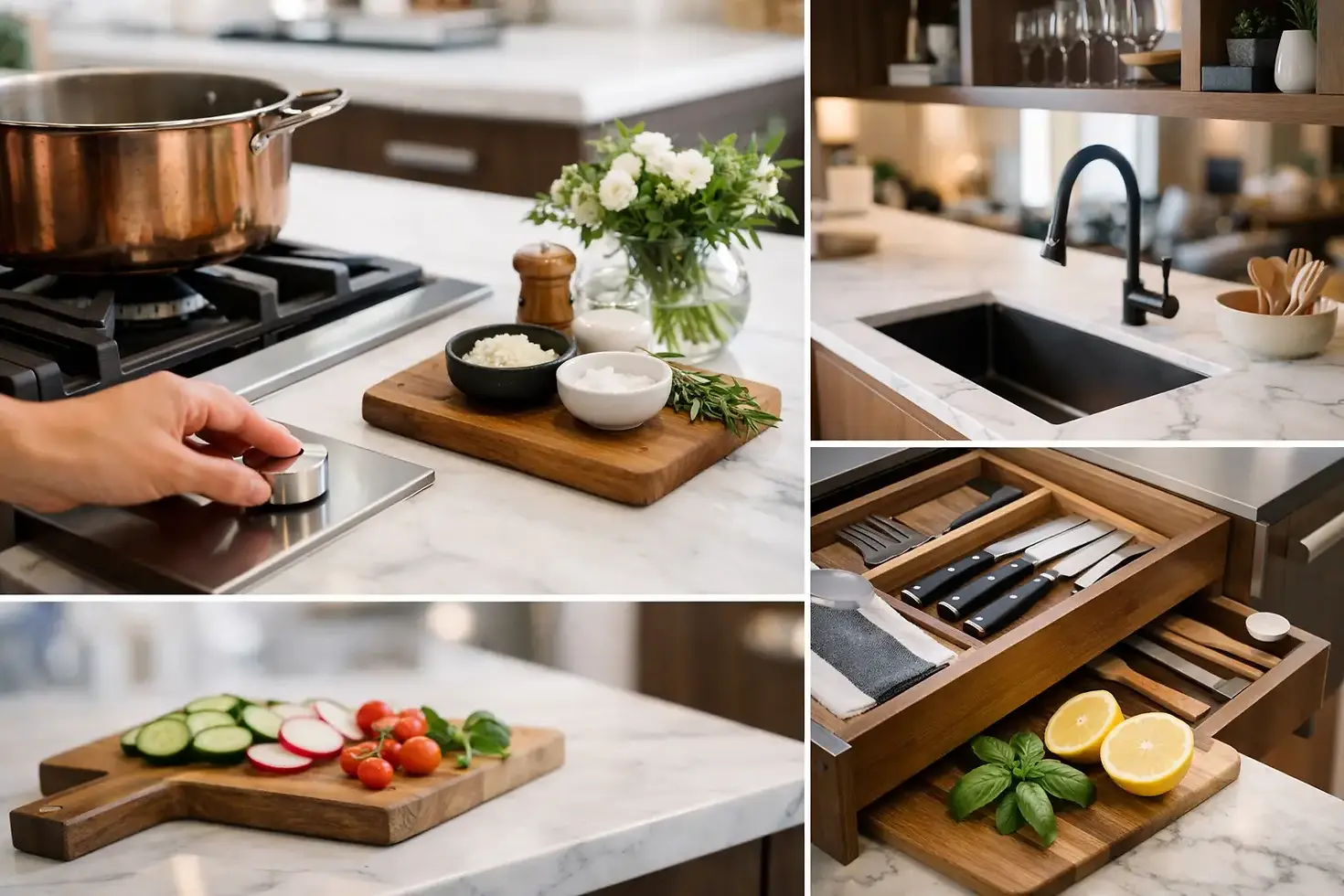
10 Attention to Detail Examples in Kitchens
A kitchen can look impressive in a showroom and still disappoint in daily life. That gap usually comes down to the finer points - the decisions that affect how a room works, feels and lasts. When clients ask what attention to detail examples really look like in a kitchen project, the answer is rarely about one grand feature. It is about many well-judged choices working quietly together.
For homeowners investing in a full kitchen renovation, those choices matter far more than they first appear. A handle position that feels awkward, a drawer that clashes with a doorway, lighting that flatters the cabinetry but leaves the worksurface in shadow - none of these issues are dramatic on paper, but all of them are frustrating once the kitchen is in use. Good design is not just about the headline look. It is about preventing those small irritations before they become expensive or permanent.
Why attention to detail examples matter in kitchen design
In a premium kitchen project, detail is not a finishing touch added at the end. It should shape the process from the first brief through to installation. That includes how the layout responds to the property, how appliances are specified, how storage is planned around real habits, and how the installation is checked on site.
This is especially important in older Surrey properties and high-value family homes, where no two spaces are quite the same. Ceiling heights vary. Walls are not always perfectly true. Structural features can affect sightlines, service runs and cabinetry sizes. A design that ignores those realities may still look good in a render, but it will not deliver the same standard once built.
10 attention to detail examples that make a real difference
1. A layout planned around movement, not just measurements
A kitchen can fit on a plan and still feel awkward. One of the clearest attention to detail examples is a layout that considers how people actually move through the room. That means checking door swings, circulation routes, seating clearances and how multiple people use the space at the same time.
An island, for example, may look generous in a design presentation, but if the walkway is too tight once stools are occupied, the room quickly feels compromised. Equally, a run of tall cabinetry might maximise storage but create a heavy, enclosed feel if placed in the wrong part of the room. The detail lies in balancing proportion, comfort and practicality rather than forcing every possible unit into the space.
2. Storage designed around specific habits
Good storage planning is never generic. It should reflect how a household cooks, shops and lives. A client who entertains frequently will need a different arrangement from a family focused on weekday efficiency. That may affect where crockery is stored, whether dry goods sit near prep areas, or how utility functions are separated from the main kitchen.
The detail here is not simply adding more storage. It is placing the right storage in the right location. Deep drawers beside the hob, internal organisers for cutlery and utensils, and dedicated space for small appliances can make a kitchen easier to use every day without adding visual clutter.
3. Appliance specification that suits the brief
Appliances are often chosen late or based on brand recognition alone. That can be a mistake. One of the more important attention to detail examples is ensuring appliance choices support the way the kitchen will be used, the cabinetry they sit within, and the electrical and ventilation requirements around them.
It depends on the client. A passionate cook may prioritise extraction performance and a larger induction zone. Another household may place more value on refrigeration capacity, quiet operation or steam cooking. These are not minor distinctions. If the specification is wrong, the kitchen may still look polished, but it will not perform in the way the client expected.
4. Lighting layered for function and atmosphere
Lighting is often underestimated until the room is finished. By then, correcting it can be disruptive and costly. A well-considered kitchen needs several types of light working together - practical task lighting, ambient lighting and feature lighting where appropriate.
This is where detail prevents disappointment. Pendant lights may create a strong visual focal point, but they should not be the only light source over an island used for preparation. Under-cabinet lighting can dramatically improve function, but only if the colour temperature and placement are right. A refined scheme considers how the kitchen feels in the morning, during family meals and in the evening when the space becomes more relaxed.
5. Material choices matched to real use
A beautiful material is not always the right material for a particular household. Natural stone, timber veneers, painted finishes and metal accents all bring character, but they also come with different maintenance needs, ageing patterns and durability levels.
One of the strongest attention to detail examples is guiding clients towards finishes that suit both the design intent and their tolerance for upkeep. A polished surface may show marks more readily. A darker painted finish can reveal dust and fingerprints. A textured worktop may be forgiving in one sense and harder to clean in another. There is rarely one perfect answer. The right choice depends on lifestyle, expectations and how honest the early conversations have been.
6. Alignment, spacing and symmetry where it counts
Some details are felt before they are consciously noticed. The alignment of cabinet lines, the consistency of shadow gaps, the relationship between drawers and adjacent panels - these are the elements that make a kitchen feel composed and expensive.
This does not mean every room should be rigidly symmetrical. In fact, forcing symmetry can sometimes create poorer storage or awkward planning. The real skill lies in knowing where visual order matters and where function should take priority. A refined kitchen often looks calm because someone has resolved those small visual decisions properly.
7. Service planning before installation begins
Electrical points, plumbing positions, extraction routes and flooring levels are rarely glamorous topics, but they are central to a smooth project. If they are not coordinated early, compromises appear later. That might mean moving a drawer because of pipework, adjusting a cabinet depth, or accepting an untidy finish around a service connection.
Careful service planning is one of the most practical attention to detail examples because it protects both the design and the installation. It also reduces stress during the build. Clients do not want avoidable surprises once trades are on site and decisions become time-sensitive.
8. Interior cabinet detailing that improves daily use
Much of what makes a kitchen satisfying happens behind closed doors. Internal drawers, pull-out larders, bin solutions, corner mechanisms and charging points can all improve convenience, but only when specified thoughtfully.
There is a trade-off here. More mechanisms do not always mean a better kitchen. In some cases, simple shelves and well-sized drawers are more durable and easier to use. The value is in selecting internal features that earn their place rather than adding complexity for its own sake.
9. Installation checks that protect the finished result
Even an excellent design can be undermined by poor execution on site. Attention to detail at installation stage means checking levels, filler sizes, joint lines, appliance fit, door adjustments and finish quality throughout the process rather than only at the end.
This is where project oversight matters. Walls and floors in real homes are rarely perfect, and experienced installers know how to respond without losing the integrity of the design. A stress-free client experience usually depends on those issues being identified and resolved quietly, before they become visible problems.
10. Finishing touches that support the whole room
The final layer of a kitchen often determines whether it feels complete. Socket finishes, handle choices, splashback detailing, edge profiles, paint colours and transitions into adjoining spaces all influence the result.
These details should never be treated in isolation. A brass tap may be attractive on its own but feel out of place if it does not relate to handles, lighting and the broader interior scheme. Likewise, a bold splashback can lift the room or dominate it, depending on the cabinetry and sightlines. Small choices carry weight because they are repeated across the space.
What these examples reveal about a well-run project
The common thread across all of these attention to detail examples is not perfectionism for its own sake. It is careful thinking at the right stage. A kitchen project becomes more straightforward when decisions are made with enough foresight, technical understanding and respect for how the room will actually be lived in.
That is why design, specification and project coordination should not be separated too sharply. A beautiful concept only becomes a successful kitchen when it is backed by accurate planning and disciplined delivery. At Moore By Design, that joined-up approach is what allows detail to be managed consistently from first conversation to final handover.
For homeowners, the benefit is not simply a better-looking kitchen. It is a room that feels easier, calmer and more intuitive from the day it is finished. The best details are often the ones you stop noticing because everything works exactly as it should.
If you are planning a new kitchen, it is worth paying close attention to the quiet decisions as much as the obvious ones. They are usually the difference between a kitchen that photographs well and a kitchen that lives well for years to come.


Comments